
Providing advanced cardiology care with modern diagnostic technology and expert treatment. Our mission is to deliver compassionate heart care, focusing on prevention, accurate diagnosis, and minimally invasive cardiac therapies for better long-term health.


A woman who had undergone multiple cardiac surgeries and had a pacemaker implanted was considered at very high risk for conventional Mitral Valve Replacement (MVR) surgery. She was successfully treated with a non-surgical Transcatheter Mitral Valve Replacement (TMVR) procedure.
"பலமுறை இதய அறுவை சிகிச்சைகள் மற்றும் பேஸ்மேக்கர் (pacemaker) பொருத்தப்பட்டிருந்த, மிட்ரல் வால்வு மாற்ற அறுவை சிகிச்சைக்கு (MVR) மிக அதிக ஆபத்துள்ள நிலையில் இருந்த ஒரு பெண்மணிக்கு, அறுவை சிகிச்சை இல்லா மிட்ரல் வால்வு மாற்று முறை (TMVR) வெற்றிகரமாக மேற்கொள்ளப்பட்டது."
In an extraordinary clinical breakthrough demonstrating the power of modern structural heart interventions, Dr. X. Rufus Demel successfully performed a complex, life-saving Valve-in-Valve Transcatheter Mitral Valve Replacement (TMVR) on a woman deemed at prohibitive, life-threatening risk for conventional redo open-heart surgery. Having endured multiple prior cardiac surgical operations and living with an implanted permanent pacemaker, the patient’s surgical bioprosthetic mitral valve had severely degenerated, precipitating acute cardiac compromise.
A conventional open-heart re-operation (re-do sternotomy) presents extreme challenges in patients with repeated previous thoracic surgeries. Extensive pericardial scar tissue, dense mediastinal adhesions, altered vascular geometry, and the delicate presence of indwelling pacemaker leads all exponentially multiply the danger of surgical re-entry, massive bleeding, and prolonged cardiopulmonary bypass complications. Faced with these severe surgical contraindications, Dr. Rufus and his clinical team selected a state-of-the-art, non-surgical catheter-based approach: delivering a new bioprosthetic valve directly inside the failed surgical valve frame with pinpoint fluoroscopic accuracy.
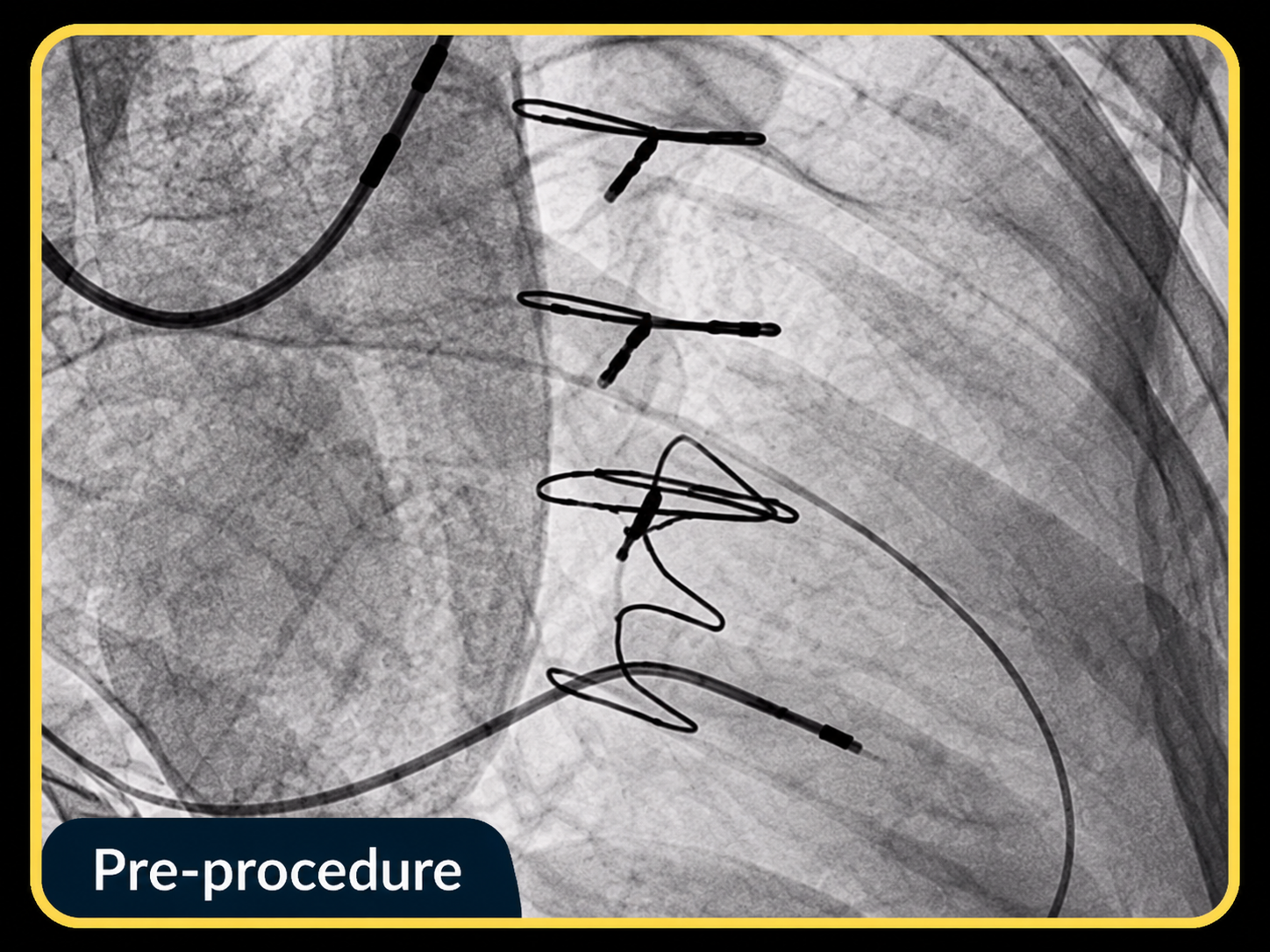
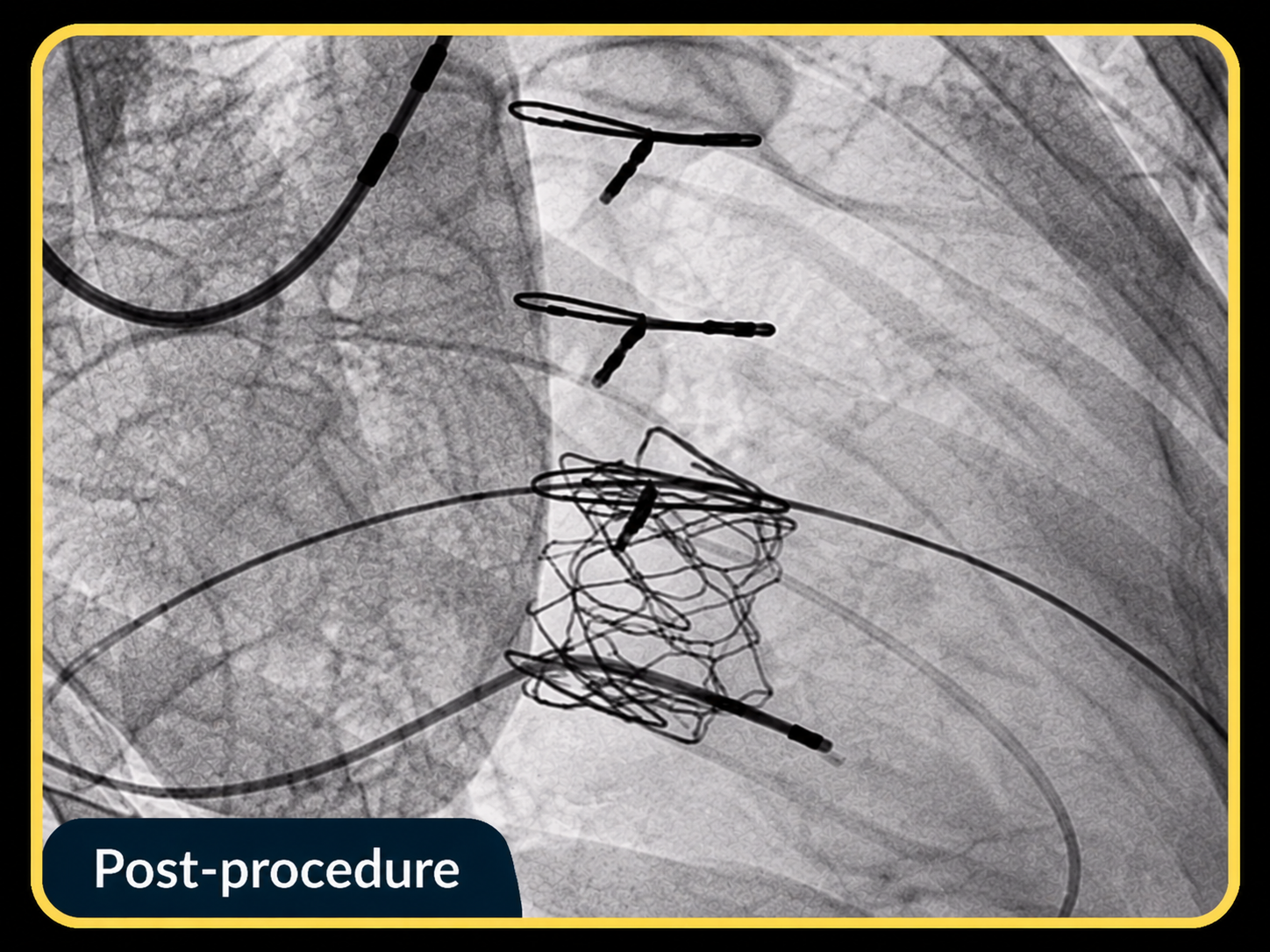
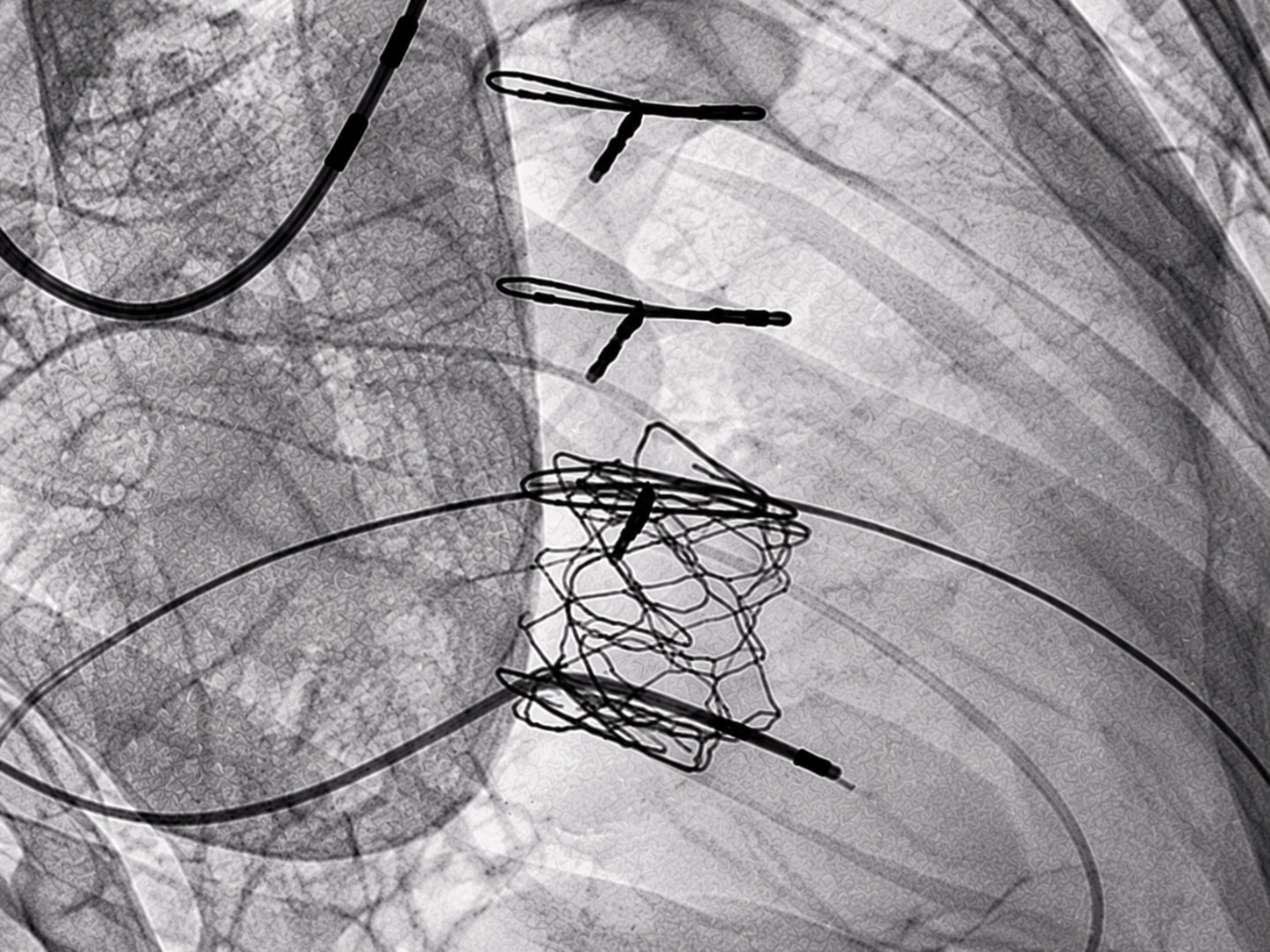
High-resolution fluoroscopy imaging capturing the critical phases of the Valve-in-Valve TMVR procedure, lead navigation, and final stable valve seating.